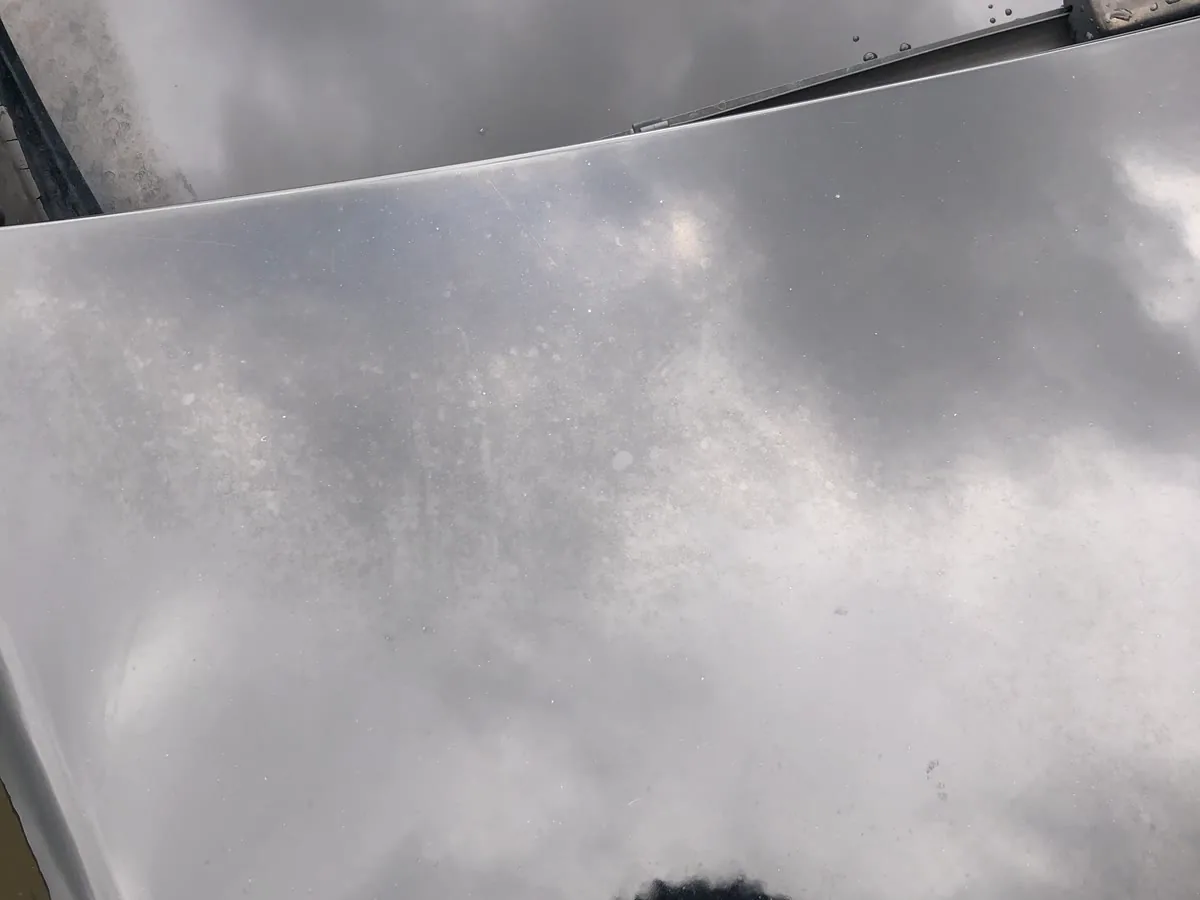
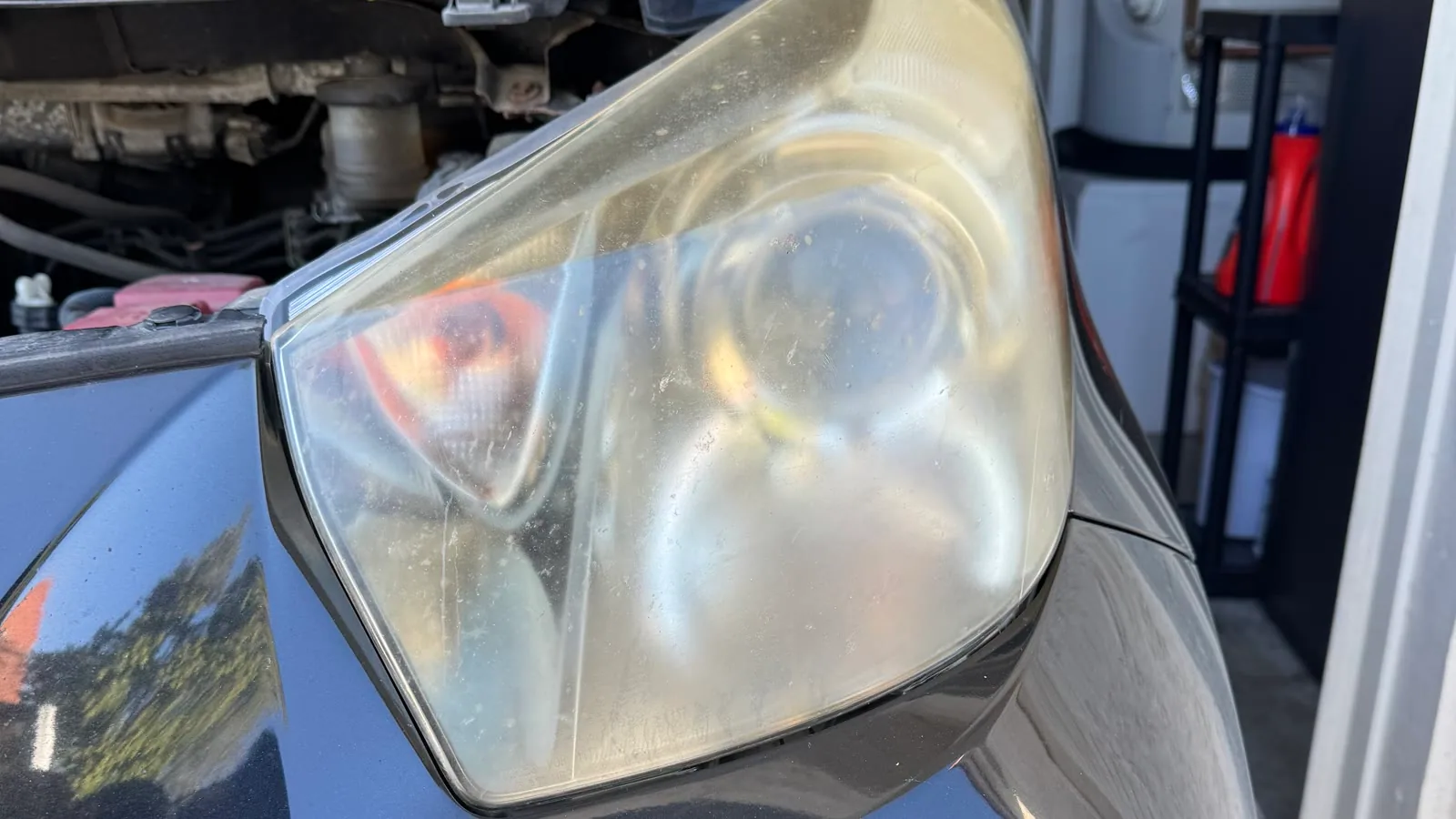
Car paint oxidation is the dull, chalky or faded look paint gets when sun breaks down its top layer. It can usually be fixed by machine polishing, which removes the damaged layer and exposes fresh clear coat. If the clear coat is peeling, flaking or milky, that's clear coat failure, and polishing can't fix it. The panel needs paint.
I'm Tyroo. I've done 300+ details around the west San Fernando Valley since April 2024, I'm rated 5.0 across 41 Google reviews, and I measure paint with a thickness gauge before I polish it. This is one part of my guide on how to protect car paint, the part where the protecting came a bit late.
I don't repaint cars or do bodywork. So when I tell you a panel can't be saved, I'm not upselling you. I'm losing the job, which is the most honest thing a detailer can do short of paying you.
On this page
- Oxidation or clear coat failure? The quick table
- What oxidized car paint actually is
- The test: can your paint be saved?
- Why Valley cars fade from the top down
- How oxidation removal works
- Clear coat restoration: how much you can spend
- Why faded red paint gets the blame
- Tree sap: the small spot that becomes a dull one
- What it costs against a repaint
- Keeping it from coming back
- What people tell me on the phone
- Questions people actually ask
Oxidation or clear coat failure? The quick table
They get called the same thing and they are not the same problem. Mike Phillips, who has taught detailing for decades, puts it bluntly: "You can fix oxidation. You cannot fix clearcoat failure."
| What you see | What it usually is | Can polishing fix it? | What it needs |
|---|---|---|---|
| Dull, hazy, flat gloss | Light oxidation | Yes | One-step polish |
| Chalky, color rubs off on a cloth | Heavy oxidation, often single-stage paint | Usually | Two-step correction |
| Milky or cloudy patches that stay after washing | Clear coat starting to fail | Rarely | A test spot, then likely paint |
| Flaking edges, peeling sheets | Clear coat failure | No | A body shop and a respray |
What oxidized car paint actually is
Most cars since the 1990s wear basecoat and clear coat: the color underneath, a clear layer on top. PPG, one of the biggest paint makers, says the clear carries the UV absorbers and the basecoat has no UV protection of its own. Sun slowly breaks the clear's top layer down, and it goes dull.
Older and cheaper single-stage paint has no clear layer at all, so the color itself takes the sun. That paint "oxidize[s] very easily", and it's the one that goes properly chalky. Run a finger over it and you'll come away looking like you lost a fight with a whiteboard.
The test: can your paint be saved?
- Wash it first. Dirt and old wax look like oxidation surprisingly often.
- Wipe test. Rub a white microfiber on a dull spot. Color on the cloth points to single-stage paint.
- Look for edges. Flaking or lifting edges, usually on the roof or hood, mean the clear is failing.
- Test spot. Polish a small hidden area with a compound. If it improves, it's oxidation.
That last one is the whole diagnosis. One forum regular put it well: "If it gets better, your answer is oxidized... If it doesn't get better it's probably clear coat failure." On my jobs I do the same test spot, but I take a gauge reading first, so I know how much clear there is to work with before I spend any of it.
Why Valley cars fade from the top down
Hoods and roofs go first because they face the sky. Los Angeles averaged a UV index of 10 in 2022, per figures reported from the National Weather Service, and the EPA counts 8 and above as "very high to extreme".
So a car parked in a Woodland Hills driveway is doing the automotive version of sunbathing without sunscreen. The doors look fine, the hood looks ten years older, and the car is living two different lives depending on which way it faces.
How oxidation removal works
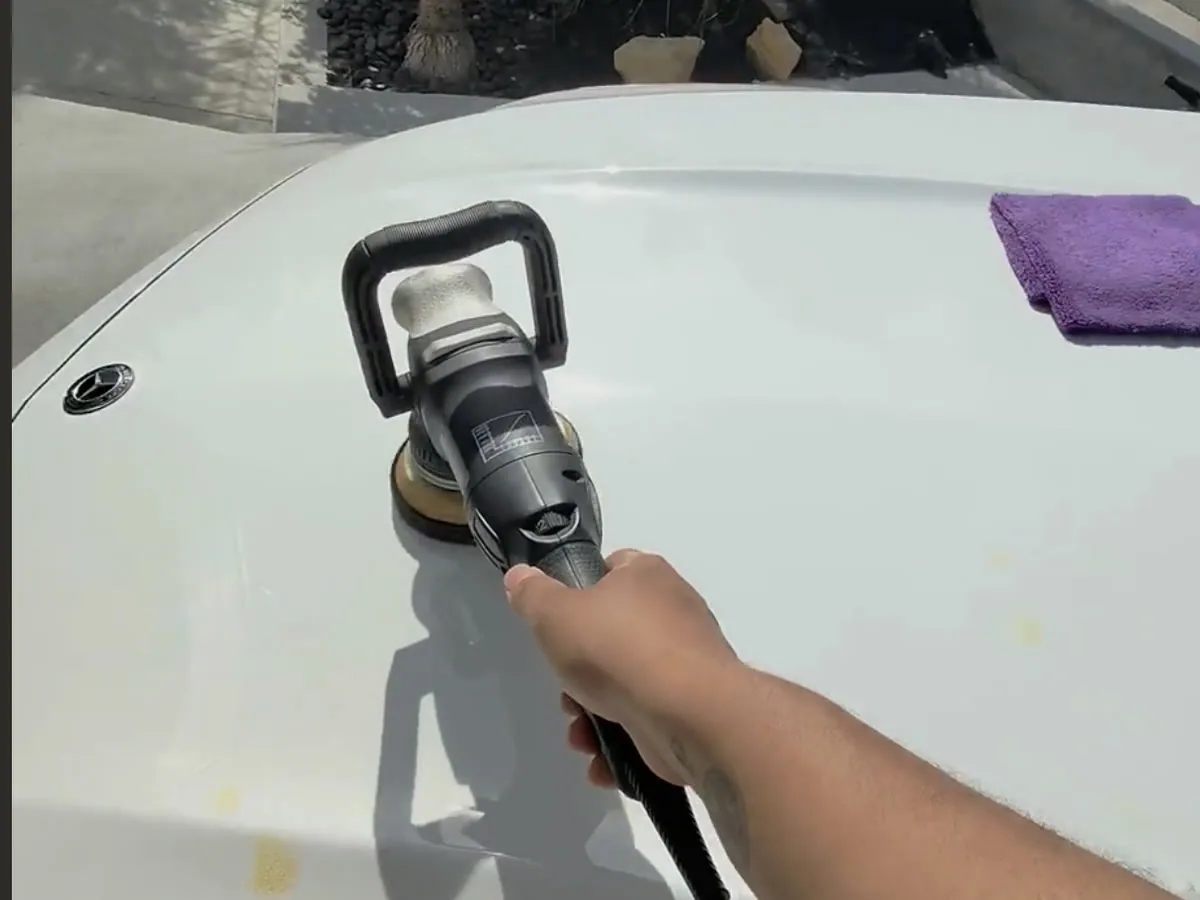
Oxidation removal is machine polishing. A polish or compound on a pad removes the dead top layer of clear, and fresh, glossy clear coat is underneath. Light oxidation needs one step; heavy, chalky oxidation usually needs a cutting compound first, then a polish to bring the gloss back.
More passes don't always mean more shine. One owner on a detailing forum did four rounds of compound and went from "hazy paint to dull paint", which is progress in the same way a smaller hole is progress. If a test spot doesn't respond, the answer is under the surface, not in the bottle.
Clear coat restoration: how much you can spend
Clear coat is thin. Factory clear is roughly 1.5 to 2 mils, about 38 to 51 microns, thinner than a sheet of printer paper. PPG's chemist says it's "really critical to build 2 mils of clearcoat" for UV protection.
Practitioners commonly say to remove no more than about a quarter of the clear, because the UV blockers sit near the top. That's practitioner consensus, not a paint maker's rule, but it's why I measure. Clear coat is a gift card with no balance check, and the gauge is the balance check.
Why faded red paint gets the blame
Red has a reputation for fading fastest. Capital One's car guide says that was true historically, and is minimized for modern paints. I couldn't find a paint maker ranking colors by fade rate, so treat "red fades most" as practitioner wisdom, not data.
Where it's real is on older single-stage red, which drifts toward pink. That's oxidized color, and it often polishes back surprisingly well. Pink cars are lovely when you ordered pink.
Tree sap: the small spot that becomes a dull one
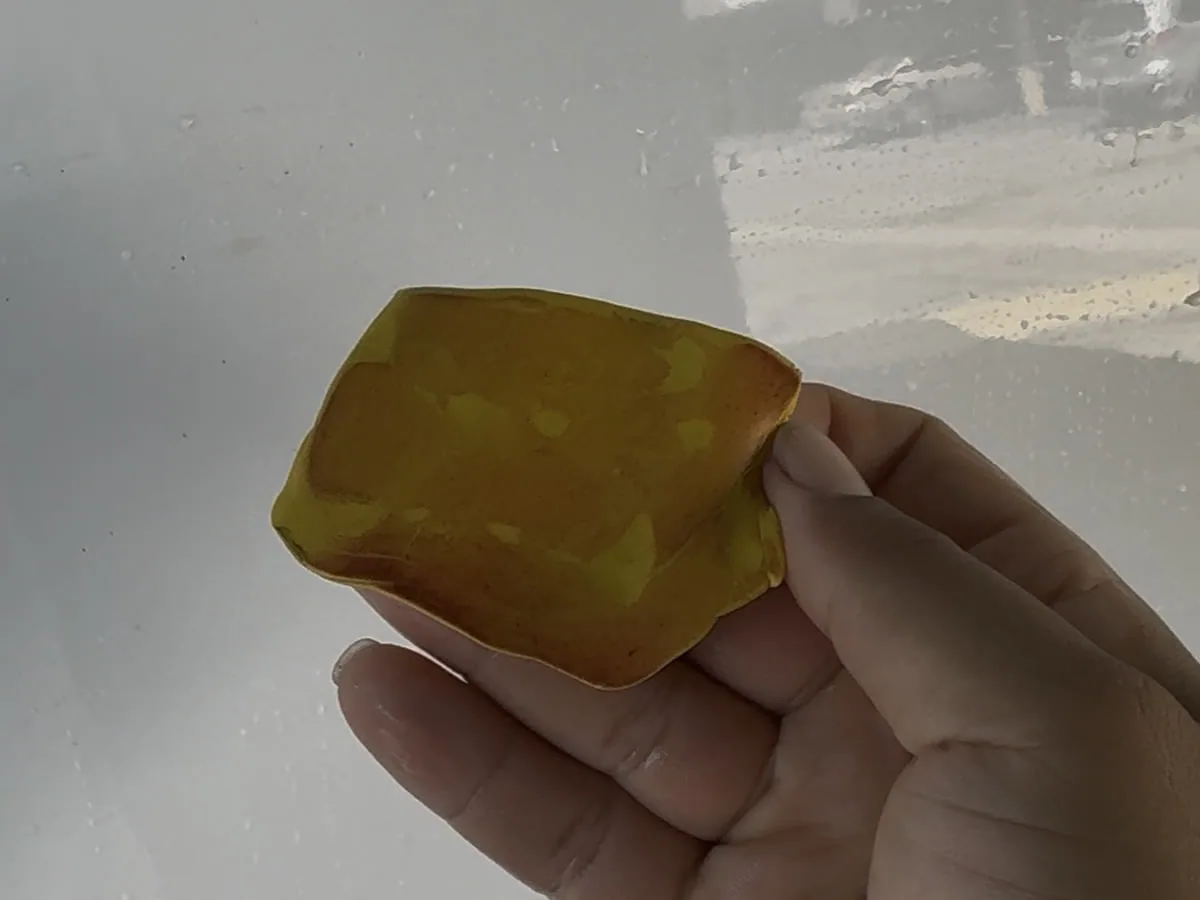
Tree sap is acidic and, left on in the heat, can etch into the clear coat and leave a dull spot. Deal with it within a few days. Left for a season, it can need polishing.
For fresh sap, The Drive recommends a 50/50 mix of isopropyl alcohol and water, or a tar and sap remover, and says never nail polish remover or WD-40. Other guides happily recommend WD-40, so the internet has agreed to disagree. A dedicated sap remover ends the argument, then re-protect the spot, because alcohol strips wax along with the sap.
What it costs against a repaint
Oxidation removal is paint correction, priced by vehicle size. My one-step, Paint Enhancement, is from $449.99 and takes about 4 hours on a sedan. The two-step, for heavy oxidation, is from $899.99 and about 8 hours.
| Option | Typical cost | Source |
|---|---|---|
| My one-step polish | From $449.99 | My booking system |
| My two-step correction | From $899.99 | My booking system |
| Mid-grade repaint | $1,000 to $4,500 | AAA |
| High-quality repaint | $5,000 to $10,000+ | Kelley Blue Book |
Prices by size and what's included are on my paint correction page, and the full breakdown is in what paint correction costs. If it's peeling, the honest number is the body shop's, not mine.
Keeping it from coming back
Once it's polished, the fresh clear is exposed to the same sun, so protect it straight away. Shade first, then a sealant or a ceramic coating with UV resistance. My coatings all include a one-step paint enhancement first, so the correction and the protection happen in the same visit. What each option does is in wax, sealant, ceramic coating or film.
Wax helps, but it won't hold back the Valley sun for long. It's sunscreen you have to reapply every month, and nobody reapplies sunscreen on schedule, least of all to a hood.
What people tell me on the phone
Most people don't know what to call it. One caller with a 2018 Prius described it as "some peeling of the outer layer. I don't know what that's called." That's clear coat failure, and the honest answer for that panel is a body shop. The fact they asked before booking a polish saved them money.
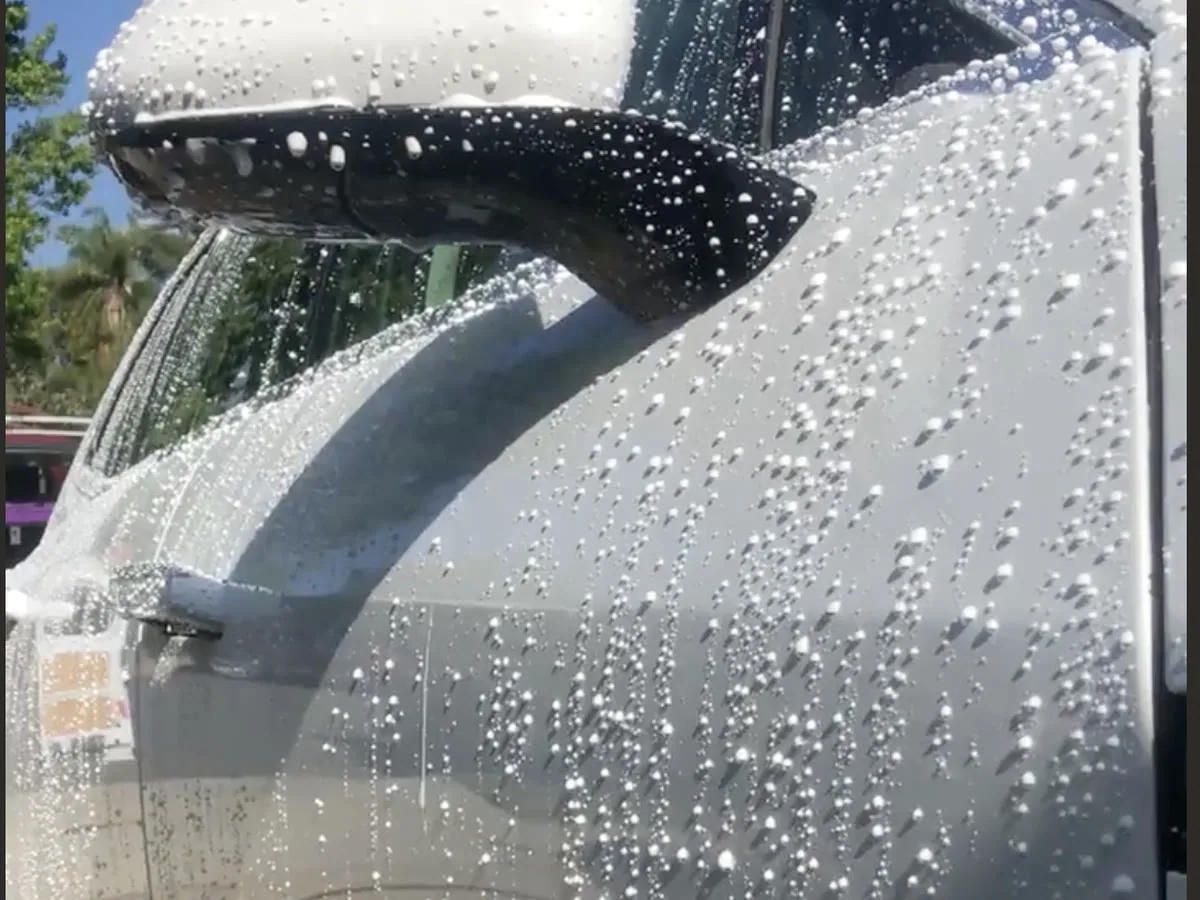
Bringing older paint back is the part people remember. Cynthia's 10-year-old black Murano had water spots a high-end car wash couldn't remove, and she wrote that it "looks spectacular now, so shiny and sparkling."
Questions people actually ask
Can oxidized car paint be fixed?
Usually, if the clear coat is still there. Machine polishing removes the dull, oxidized top layer and exposes fresh clear coat. If the clear coat is peeling or flaking, polishing can't rebuild it and the panel needs paint.
What's the difference between oxidation and clear coat failure?
Oxidation is a dull, chalky or hazy surface that improves when you polish a small test spot. Clear coat failure is milky patches, flaking or peeling edges that don't improve with polishing. One is a polishing job, the other is a body shop job.
Will wax remove oxidation?
No. Wax and glaze fill in and hide light oxidation for a few weeks, then the dullness comes back as they wear off. Removing it takes an abrasive polish or compound.
How much does oxidation removal cost?
Mine is a paint correction priced by vehicle size: from $449.99 for a one-step and from $899.99 for a two-step. AAA puts a mid-grade repaint at $1,000 to $4,500.
How do you get tree sap off a car without damaging the paint?
Soften it with a dedicated sap remover or a 50/50 isopropyl alcohol and water mix, let it dwell briefly, then wipe gently. Re-protect the spot afterwards, because alcohol strips wax. Sap left on for weeks in the sun can etch and need polishing.
Find out what your paint has left
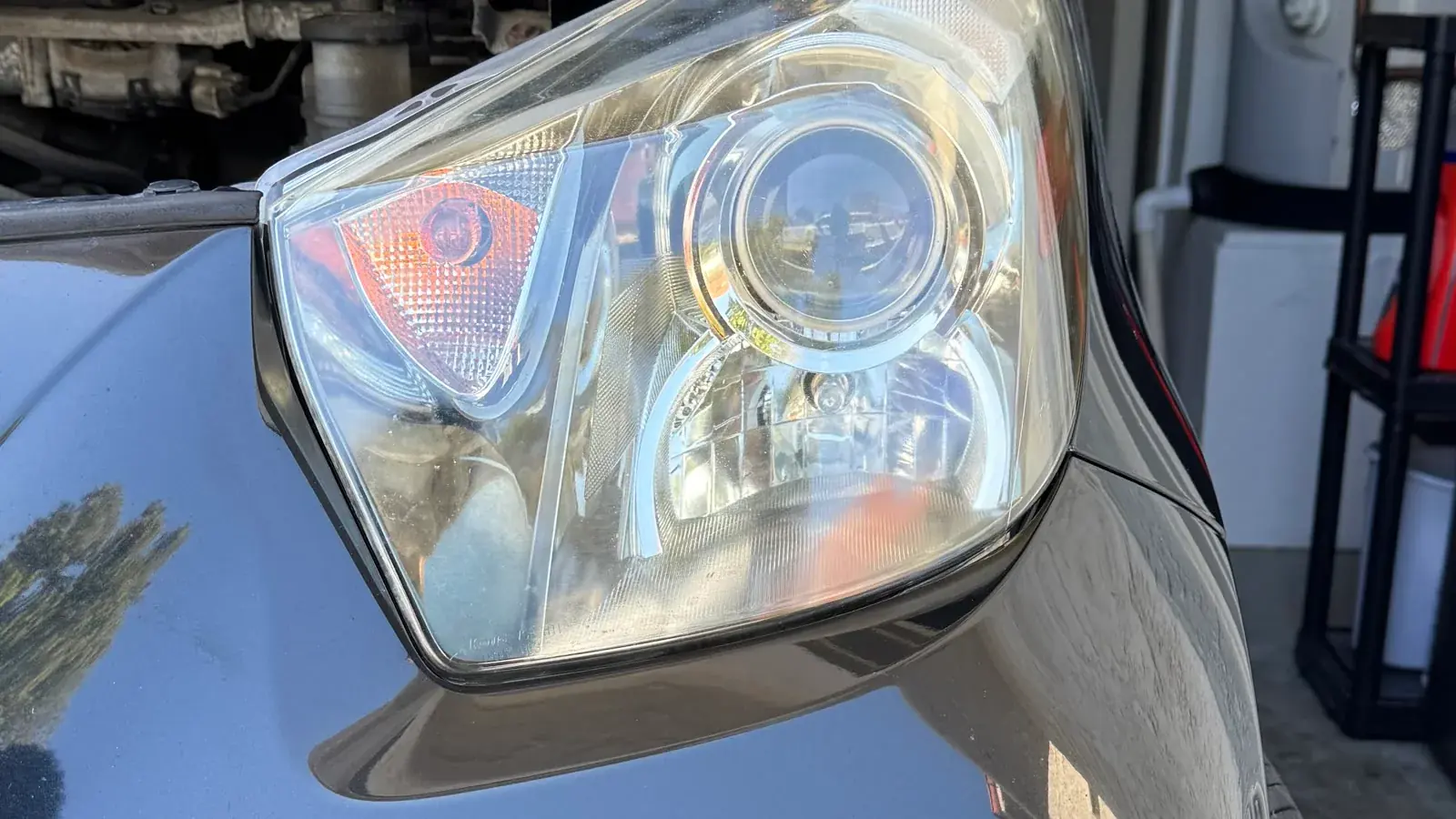
I take a gauge reading and do a test spot before anything is polished. Prices by size and booking are on my paint correction page. If it's a lens, not paint, headlight restoration is one price for both.
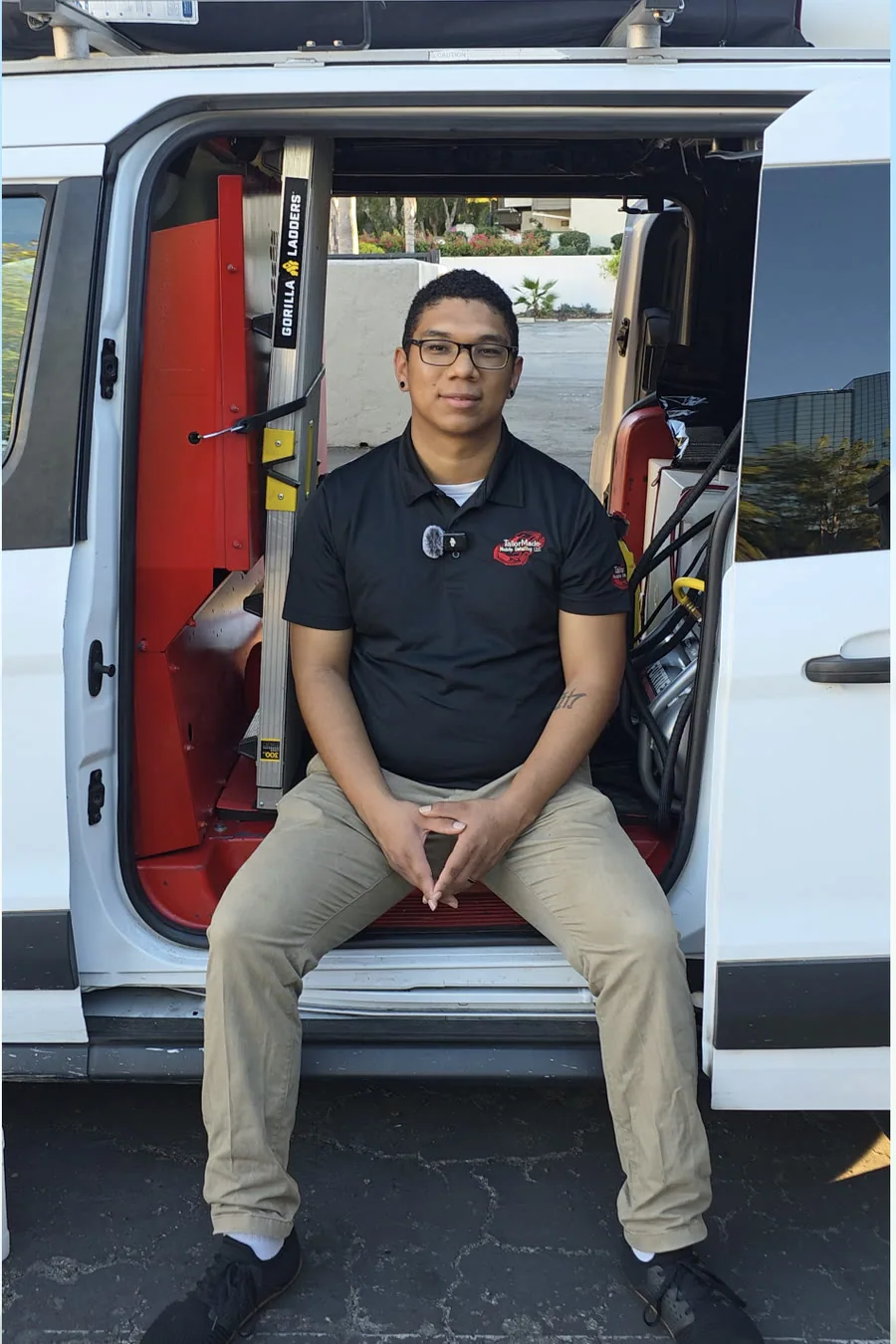
Tyroo West owns TailorMade Mobile Auto Detailing and details every car himself. He's trained in paint correction and ceramic coating, a certified SunCoat USA installer, fully insured, and has completed 300+ details since April 2024. More about Tyroo